
Designing Life in Partnership: Navigating Transitions From “Me” to “We”
Had you told me when I landed in South Florida on vacation after completing my graduate degree that thirteen years later I’d be an entrepreneur, a homeowner, and married at 39 into a West Indian–Guyanese family—I’m not sure I would have believed you. Then again, my life has never followed the typical trajectory that the conservative Midwest mindset tends to write for people.
So it’s no surprise that after five years of partnership and growth with my now-husband, I find myself living a day-to-day life hardly recognizable to Liz circa early 2020. Add in the impacts of remote work, stepping into small business ownership, the COVID-era boom in South Florida, and the curious ways local, state, and federal systems show up in everyday life. For a long time, it was mostly just me—along with a fish, student loans, a job I was outgrowing, and an expiring lease—guiding my life decisions and helping me figure out what I needed.
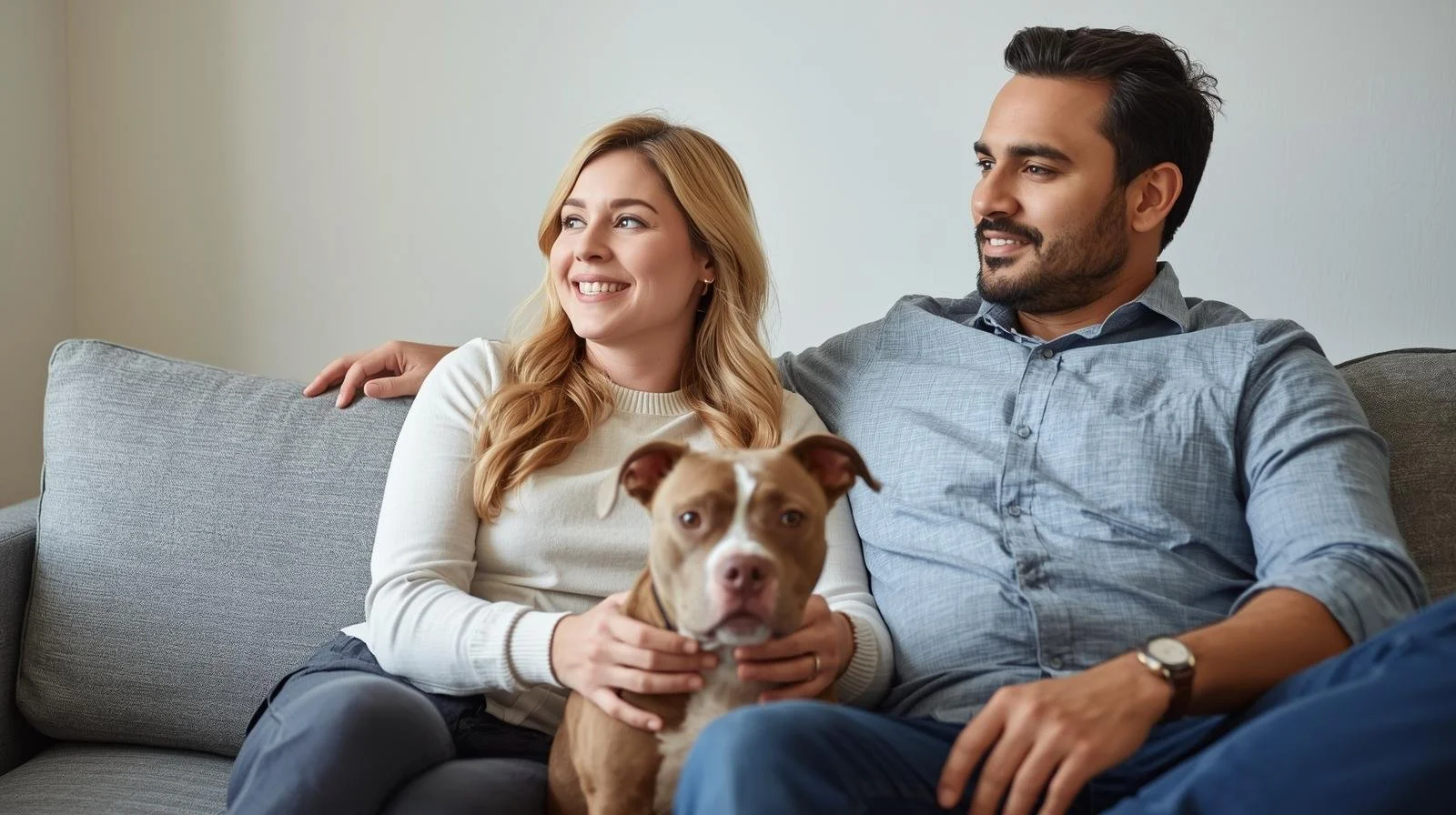
Today, I’m looking at life through the lens of we, not just me—factoring in a husband, a dog, a mortgage, a small business, and two sets of aging parents. It’s not better or worse. It’s just new terrain.
That’s the beauty of design thinking—and of choosing a partner or spouse on your own terms, at whatever age it happens, not according to the cultural playbooks handed to you. (WARNING: This later-in-life marriage thing does come with a lot of people hoping, praying, and quietly discussing your sexuality. It gets exhausting.) Over the past year, as our families, careers, and married-life rhythms have settled into something familiar, we’ve been exploring different places and communities and asking ourselves a lot of key questions—sometimes the same ones over and over as new information comes in.
We don’t have any grand announcements to make, but I do want to share ten of the core questions we’ve been exploring as we think about what’s next for Liz and Vijay’s life design.
Ten Questions to Ask Yourself When Designing Life for We:
How have our residential, social, and lifestyle needs shifted as we move through different seasons of life together?
What are our core individual and collective values, and how does our current life empower—or limit—our ability to live into them?
What do we each need for our individual and shared growth as people and professionals?
What do our families of origin need or expect from us, and how do we choose—or not choose—to live into that?
What role does our current personal, professional, and familial network play in our everyday life?
Is the place we live accessible to the people we love?
Can we afford to live, work, learn, and grow in this place?
What are our five- to ten-year financial goals?
What does the market look like for full-time or part-time work, entrepreneurship, and gig work?
What do we need to support our physical, mental, and emotional health?
As convenient as it would be to have one clear answer, how we responded to these questions five years ago, how we answer them today, and how we’ll answer them in the future will all look different. That’s the beauty of a growth mindset—the heart of career and life design—and one of the reasons I chose my partner.
It takes intention to learn who the other person is: their spoken and unspoken needs, the ways their brain works, their patterns and customs, and where growth or compromise is possible. It’s about us as individuals, as a couple, as a family unit, and as contributors to our immediate and global communities. It’s how we choose to live, work, and learn by design, not default.
So while our roots are still planted in South Florida, we’re noticing what’s shifting—inside and around us.
Until next time, y’all be curious about life out there.